William J. McDonough, President and Chief Executive Officer
Remarks by President William J. McDonough at the September 11 Commemorative Service at Trinity Church My dear friends,
We meet on the first anniversary of an act of great evil, in which almost 3,000 of our neighbors were murdered. The perpetrators of that crime pretended to act in the name of God, adding blasphemy to the sin of Cain.
How has New York responded? It did not take time out for vengeance, but rather New Yorkers, supported by the world community of decent people, rallied together to help the wounded and to help in their grief the many families who lost their dear ones.
After mourning, one of the first tasks was to rebuild. The efforts to reconstruct Lower Manhattan as a 21st century urban area, combining transportation links, cultural institutions, a thriving and interesting residential area and the traditional anchors of high finance such as the New York Stock Exchange and the Federal Reserve Bank of New York are exciting and challenging. We will achieve that dream.
That is just one of the several challenges that we Americans and New Yorkers must face in the years and decades ahead.
In looking for guidance on how to address those challenges, those of us in secular life must ask ourselves if we can be guided by moral principles and apply them to the practical world. How or should we apply the good thoughts of the Sabbath to the rest of the week?
As guidance, and turning to my own background as a Christian, I suggest we look to the 22nd Chapter of the Gospel of Saint Matthew. Jesus was asked by a Pharisee which was the greatest commandment of the law. In the language of the Saint James edition, here is the reply:
36. Jesus said unto him, Thou shalt love the Lord thy God with all thy heart, and with all thy soul, and with all thy mind.
37. This is the first and great commandment.
38. And the second is like unto it, Thou shalt love thy neighbour as thyself.
Let us consider the second of the great commandments.
I will not try to concentrate on the challenges presented to us by the terrorists, but I do want to speak on the many demands placed on our democratic political system and our market economic system by the terrorists, and, more importantly, some ongoing challenges which are not created, but only dramatized, by that attack.
The democracy envisioned by the towering figures of the Enlightenment who were our Founding Fathers was one of limited participation in the right to vote, but a society meant to serve the interests of all the people. Now, most people can vote, but are their interests equally attended?
Loving our neighbor as ourselves requires that the remaining imperfections in our democracy be corrected. Mainly, we have to make sure that all of our people, not just the privileged who can use their financial resources to satisfy their desires, be fully represented. These include children without the benefit of loving parents of adequate means, the elderly troubled by the rising cost of medical care, good workers who lose their jobs because of structural economic change or a weaker economy.
Working towards a more safe and sound and sensible world demands the leadership of the United States. Our challenge is not just geopolitics, but moral responsibility.
A market economy recognizes that human beings respond to the stimulus of different rewards for different contributions and it does, in fact, provide differentiated rewards. Some win more than others. Idealistic societies of socialist or other theories simply have not worked. Men and women are not angels. But, even given this pragmatic view, should there not be both economic and moral limitations on the gaps created by the market-driven reward system?
This is not an easy question. The United States leads the world economically because we are extraordinarily good at adjusting to economic developments and are highly skilled at accepting and implementing structural change. Above all, we benefit from an incredibly flexible labor force, of people willing to change not only their jobs, but where they live, as economic change demands. Rapidly changing technology puts a huge premium on better education and better technical training. Compared to when I entered the workforce, the relative benefit of higher skills versus a good strong back has increased dramatically.
However, even given that economic reality, we must recognize that the leadership of the American economy has made a large number of American citizens, and countless more around the world, question our judgment and/or our ethics.
I believe that most American business executives at all levels are believers in and followers of the laws of our country. It is important that we not label as sinners everybody who has been successful because a relative few have been noticeably lacking in virtue. The world depends on the economic leadership of the United States, at least as much as it does on our relative military and geopolitical strength.
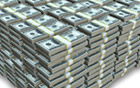
I believe there is one issue in particular which requires corrective action. A recent study shows that, 20 years ago, the average chief executive officer of a publicly-traded company made 42 times more than the average production worker. Perhaps one could justify that by the additional education required, the greater dedication, perhaps even the harder work. The same study shows that the average present day CEO makes over 400 times the average employee's income.
It is hard to find somebody more convinced than I of the superiority of the American economic system, but I can find nothing in economic theory that justifies this development. I am old enough to have known both the CEO's of 20 years ago and those of today. I can assure you that we CEO's of today are not 10 times better than those of 20 years ago.
What happened? Sadly, all too many members of the inner circle of the business elite participated in the over-expansion of executive compensation. It was justified by a claimed identity between the motivation of the executives and shareholder value. It is reasonably clear now that this theory has left a large number of poorer stockholders, especially including employee stockholders, not only unconvinced, but understandably disillusioned and angry.
The policy of vastly increasing executive compensation was also, at least with the brilliant vision of hindsight, terribly bad social policy and perhaps even bad morals. Looked at from the vantage of the second great commandment, Love they neighbor as thyself, there are some clear questions. Is not my fellow worker my neighbor? Are not other members of the community, such as the widows and orphans of 9/11 victims my neighbors? Are not the homeless my neighbors? The elderly? The dispossessed by conflicts in many countries?
It is important for those of us who have lives of great comfort and success that we recognize that the reasons for our good fortune and the reasons for the relative lack of success of the neighbors I have just described have very little to do with our own virtue. In this house of God, I should perhaps attribute it to the divinity, although such a God would be a bit too controlling for my taste. In another locale, I would suggest it is mainly good luck. A good set of genes, good health, being born to loving parents, the help of a loving friend, the support of a great teacher-any and all of these got us where we are. Yes, we deserve some credit. But we should remember that two most attractive virtues are realism and humility.
What should be done, if anything, about this recent explosion of claimed privilege? Any notion of moral balance has to say to our fellow leaders of the private community that corrective action is required. We should avoid, as much as possible, government action because laws or regulations are far too blunt instruments to deal with the myriad of differences in the highly sophisticated and flexible American economic system.
It should be done voluntarily. Why?
Because we will be a stronger society by coming closer to the commandment: And thou shalt love thy neighbor as thyself.
But, how? Beginning with the strongest companies, CEO's and their boards should simply reach the conclusion that executive pay is excessive and adjust it to more reasonable and justifiable levels truly related to the benefit of shareholders and other stakeholders such as workers and the community. If the best companies lead the way, the market economy, through the stock market, will force other companies to follow.
Money not going to excess executive compensation will be available for distribution to the shareholders or kept in the company to finance its development, a far sounder way to finance expansion than by borrowing.
And if there is some left over to give to good causes, that truly will benefit our society now and in the future. From pure corporate self-interest, an obvious contribution should be to education, the source of the highly trained and motivated workers which our ever more demanding economy will require.
Many tasks await us and not just those I have suggested. There can and should be a moral theme to all of our actions.
May all of us commemorate this day by making our world, our country, our city, our neighborhood a better place because we are making ourselves better people.
And thou shalt love thy neighbor as thyself.
|